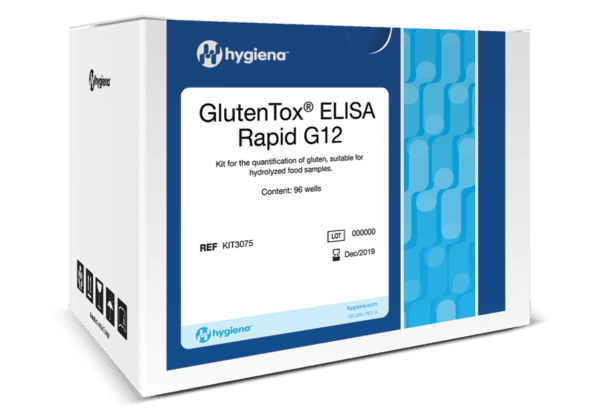


Gluten test kits detect gluten proteins from wheat, barley and rye in food, ingredients, rinse water and on production surfaces. Food and beverage manufacturers use them to verify cleaning, release product and support gluten-free labels. The right method depends on your goal - screen quickly on-site, quantify gluten in parts per million, or confirm results by DNA when processing has broken the protein down.
Food manufacturers test for gluten in three ways: rapid lateral flow tests to screen products and surfaces on-site, quantitative ELISA to measure gluten in parts per million for gluten-free verification, and PCR to confirm gluten when processing has degraded the protein.
Key facts
Choose by what you need to prove. Use a rapid lateral flow test to screen foods and surfaces on-site, a quantitative ELISA to document ppm for a gluten-free claim, and PCR to confirm gluten when heat or fermentation has degraded the protein. Hygiena covers all three, so one supplier supports your whole gluten program.
Find answers to common questions about implementing rapid allergen testing technology in your food safety testing program.