



Food Safety
The Hidden Risk of Partial Inhibition: Why Some Foods Mask Salmonella and Other Pathogens
What Is Partial PCR Inhibition in Food Testing? Causes, Risks, and How to Prevent False Negatives
Partial inhibition occurs when components such as fats, polyphenols, proteins and spices in complex or low‑moisture foods interfere with DNA extraction or amplification, thereby weakening PCR performance and increasing the risk of false negatives and/or invalid results. These matrices often contain stressed or low-level pathogens that are already difficult to detect, making any reduction in amplification efficiency even more critical. To ensure accurate results, laboratories should rely on validated workflows that include secondary enrichment and built-in internal controls, which help recover injured cells, dilute inhibitors and flag any reactions affected by inhibition before they lead to inaccurate interpretations.
What Causes False Negatives in PCR Testing?
PCR testing is built for precision. But sometimes, the food itself gets in the way. Ingredients such as cocoa, peanut butter, spices and other complex matrices contain fats, proteins and polyphenols that interfere with amplification, making pathogens harder to detect. These substances can weaken the PCR signal, especially when combined with low-level contamination. When that happens, a test may return a negative result even though the pathogen is still present.
For manufacturers handling certain ready-to-eat or low-moisture foods, this silent risk matters. Even a single Salmonella cell in a dry product can persist for months, creating downstream issues long after the initial test. This raises an important question for any food safety program:
Do you trust your negative results, and what can be done instead?
Understanding Partial Inhibition
PCR inhibition occurs when substances in a food sample interfere with DNA extraction or amplification. These compounds can bind to or degrade DNA, block the polymerase enzyme, alter the availability of ions or prevent consistent extraction. When this happens, the reaction still runs, but the amount of detectable DNA is reduced. The signal appears weaker or later than expected, which increases the risk of missing contamination that is actually present.
This effect is subtle but important as the assay does not necessarily fail outright; yet, borderline contamination may no longer reach detectable levels. This is one of the most common sources of false negatives in complex or low-moisture foods.
Which Foods Commonly Cause Inhibition?
Some foods naturally contain inhibitors because of their components. For example, cocoa and chocolate contain high levels of fats and polyphenols. Nut pastes and peanut butter include dense lipids that complicate extraction. Spices and herbs contain polysaccharides, calcium and essential oils that slow or suppress amplification. High-protein foods can bind magnesium, which is required for PCR enzymes to function properly.
Despite their differences, these matrices create the same challenge: reduced amplification efficiency and a greater risk of not detecting low-level contamination.
What Partial Inhibition Looks Like in Practice?
Most inhibition events are partial rather than complete. The PCR curve may still appear, but borderline contamination can fall below the detection threshold in challenging matrices. In these cases, results may look clean even though low-level pathogens remain present, especially when contamination levels are already very low.
Why Do Low-Moisture Foods Create Additional Risk?
Low-moisture foods such as cocoa, nut pastes, chocolate and powders have long been associated with Salmonella, but they also present additional biological challenges.
Dry environments create stressed or injured bacterial cells that are still capable of causing illness. These cells recover slowly during enrichment, which means they may not reach detectable levels within the timeframe for which the PCR assay and its software are designed. Contamination in these products often occurs at fractional levels, sometimes as low as 1 cell per 100 grams. When amplification is already inhibited, these borderline positives are the first to disappear.
Low-moisture environments also favor long-term survival. Salmonella can remain viable for months or even years, posing a risk throughout the shelf life of the product. When stressed cells, low contamination levels and inhibition overlap, the probability of false negatives increases significantly.
What is the Dilution Dilemma?
One common approach to overcoming the effects of inhibition is diluting the DNA lysate before performing PCR. Reducing inhibitor concentration can improve amplification. However, this step also reduces the concentration of the target DNA. Post-extraction dilution may not be part of a method validation; therefore, laboratories may unintentionally introduce a loss of sensitivity in the method. For low-moisture matrices, where Salmonella may already be present at extremely low levels, this loss of sensitivity can be enough to shift a weak positive into a negative.
Is Secondary Enrichment a Better Approach?
A secondary enrichment step is often a more reliable solution for inhibitory matrices. Unlike lysate dilution, secondary enrichment can increase the number of target cells while simultaneously reducing the influence of inhibitory compounds. As the culture grows, stressed cells recover, and inhibitory substances become more diluted by the additional broth volume. This improves overall detection without compromising sensitivity.
For foods known to be challenging for PCR, such as cocoa, chocolate and nut pastes, Hygiena® provides validated secondary enrichment options as part of the workflow. These protocols are designed to maintain the method’s performance claims, providing a consistent, validated approach for challenging matrices.
How do Internal Controls Help Prevent False Negatives?
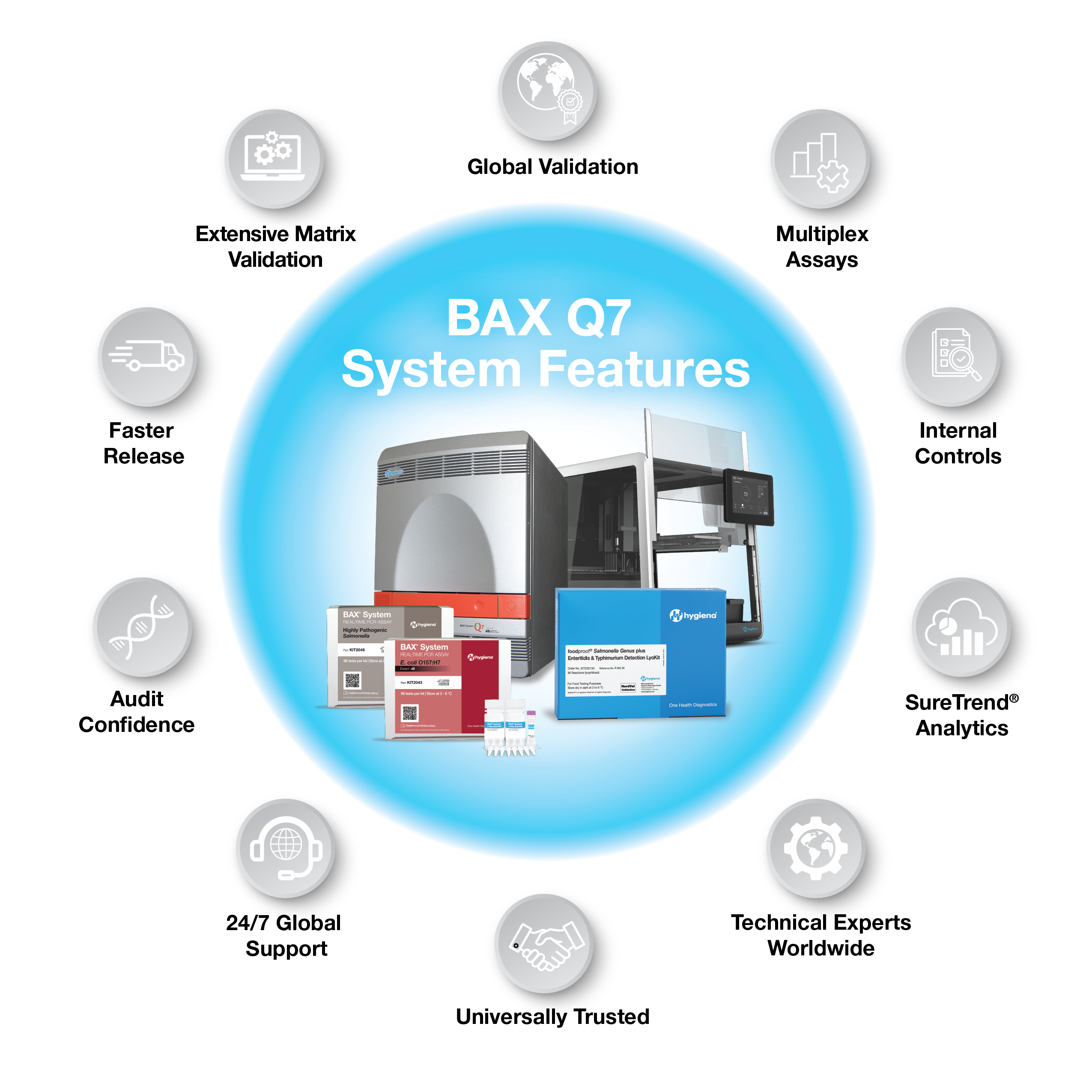
Internal amplification controls play a key role in identifying inhibition before it leads to an incorrect result. Hygiena’s BAX® System Q7 and foodproof® assays include an internal positive control in every reaction to confirm that the chemistry performed as expected. If the internal control does not amplify, the result is marked as indeterminate rather than negative. This prevents inhibition from being misinterpreted as a true negative and helps ensure that results reflect the sample's actual condition.
A diagnostic test that detects pathogens should also confirm that the reaction itself worked. Internal controls provide this assurance and increase confidence in a true negative result.
Why Does Validation Matter?
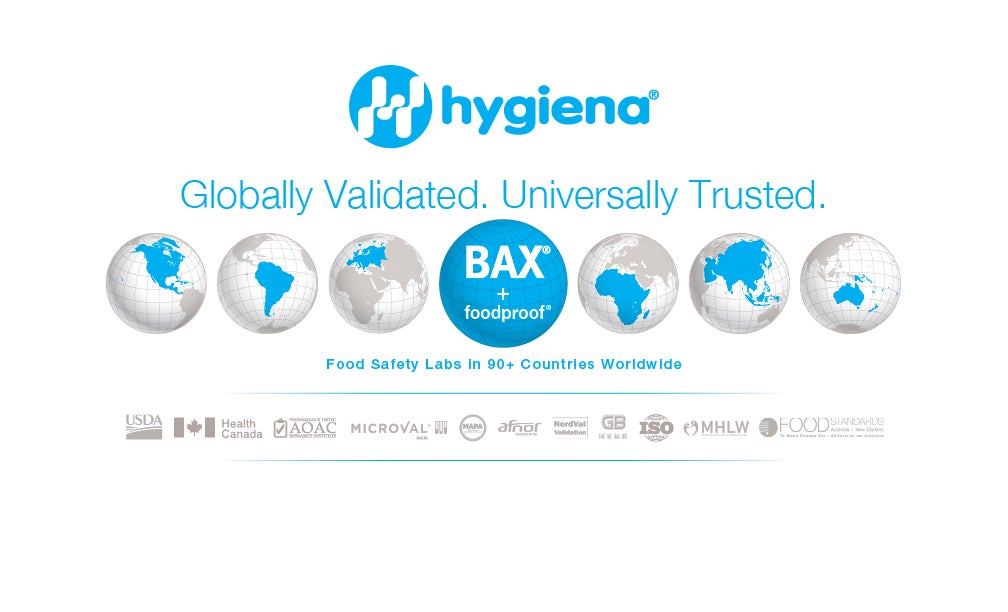
Each food behaves differently during testing, which is why extensive matrix-specific validation is essential. Validation bodies such as AOAC, ISO, Health Canada, AFNOR, MicroVal and NordVal require testing across a broad range of food types to ensure reliable performance. Hygiena’s BAX and foodproof assays have been validated across low-moisture, high-fat, high-protein and complex matrices to help laboratories maintain confidence in their detection outcomes.
This level of validation offers quality teams and auditors assurance that negative results are meaningful and not due to partial inhibition.
Practical Steps to Reduce Inhibition Risk
Reducing inhibition begins with confidence in the method being used. Laboratories should rely on fully validated assays that are appropriate for the matrices being tested and ensure that internal controls are included to automatically detect inhibition. Methods with secondary enrichment are a wise choice for matrices known to challenge extraction or amplification. Sample preparation may also require adjustment for oily, viscous or powdery foods.
These steps strengthen the overall workflow and support accurate decision-making.
The Takeaway
Partial inhibition is an unseen factor in pathogen testing, especially in complex or low-moisture foods. It does not always stop the chemistry, but it can quietly weaken the signal needed to detect low-level contamination. Through validated PCR methods, internal controls and matrix-specific enrichment steps, laboratories can improve the reliability of their negative results.
In molecular diagnostics, accuracy defines both confidence and safety.
These matrices are challenging, and the risks are real. Hygiena provides validated BAX System Q7 and foodproof assays designed to support accurate decision-making for difficult foods, stressed cells and low-level contamination.
With the right tools, laboratories can trust the results they rely on every day.
Frequently Asked Questions (FAQ)
Q: What is partial inhibition?
Partial inhibition is when food components weaken PCR amplification without causing a full reaction failure.
Q: Which foods are most prone to inhibition?
Cocoa, chocolate, nut butters, spices, herbs, and high-fat or high-protein foods.
Q: Does dilution fix inhibition?
Dilution can reduce inhibitors but may also reduce sensitivity, causing borderline positives to become negative.
Q: Why is secondary enrichment recommended?
It helps stressed cells recover and reduces the impact of inhibitors without sacrificing sensitivity.
Q: How can I detect inhibition before it causes errors?
Use assays with internal amplification controls that flag potential inhibition.


